Business & Investment
SIERRA LEONE AT A GLANCE
Situated between Guinea and Liberia, with Africa’s largest natural harbour, Sierra Leone has long played an important economic role in the region.
Economic growth
Human resource potential
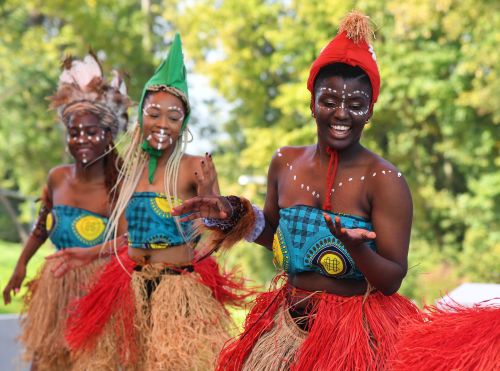
Mineral resources
◊ Diamonds, iron ore, titanium, bauxite and gold
♦ World’s third largest iron ore deposit
◊ World’s fifth largest rutile deposit
Top exports:
- iron ore ($490.9 million)
- titanium ore ($221 million)
- diamonds ($101 million)
Political and social stability
⇒ Six democratically elected governments since 1996 (the Second
Republic)
⇒ Non-permanent member of the UN Security Council for 2024 to 2025
⇒ Known for its remarkable religious tolerance
- Muslim – 77%
- Christian – 22%
Agricultural potential
◊ Arable land: ~5.4 million hectares
¦¦ Abundant rainfall: 2,945.3 mm average annual rainfall
∗ Sunny climate: >1,500 hours average annual sunshine
∗ Temperate tropical climate: 26°C average annual temperature
≈ Nine major rivers with significant irrigation potential
Tourism potential
» 402km coastline and 350km of white sandy beaches
» Exceptional potential for ecotourism: 15 protected natural areas
home to pygmy hippos, leopards, chimpanzees, many bird species
and forest elephants
» Rich biodiversity: 2,090 known species of higher plants, 147
mammals, 626 birds, 67 reptiles, 35 amphibians
Strategic Location:
Access to regional and global markets via the Atlantic Ocean.
Abundant Resources:
Rich in minerals, fertile land, and marine wealth.
Stable Governance:
A government focused on private sector growth and foreign investment.
Incentives:
Attractive tax holidays, repatriation of profits, and investor protection laws.
Young Workforce:
Skilled, English-speaking population ready for industrial expansion.
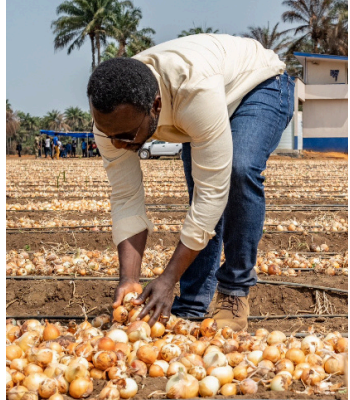
Sierra Leone is a member of the Mano River Union (MRU), which includes Guinea, Sierra Leone, Liberia, and Côte d’Ivoire with a combined market size of ~40 million.
Sierra Leone is also a member of the Economic Community of West African States (ECOWAS), which includes another 14 countries: Benin, Burkina Faso, Cape Verde, Côte d’Ivoire, The Gambia, Ghana, Guinea Bissau, Guinea, Liberia, Mali, Niger, Nigeria, Senegal and Togo. ECOWAS has a combined market size of ~ 400 million). ECOWAS is working towards the removal of trade barriers and harmonisation of trade policies for the establishment of a Free Trade Area, a Customs Union and a Common Market, with the aim of creating a Monetary and Economic Union in West Africa. ECOWAS is also working in three areas to promote investments and competition policies namely: creation of the ECOWAS Common Investment Market, investment climate promotion and financial market integration.

The UK’s Developing Countries Trading Scheme (DCTS), which replaced the UK’s Generalised Scheme of Preferences, cuts tariffs, removes conditions and simplifies trading rules for 65 developing countries, including Sierra Leone, in order to support their development.
Sierra Leone is also party to a multilateral agreement with the African Continental Free Trade Agreement (ACFTA), a trade agreement between 55 African Union member states to create a single market and a single currency union (with a market size of ~1.3 billion).

Sierra Leone has a preferential trade agreement with the European Union through the Everything but Arms (EBA) scheme and with the United States through the African Growth and Opportunity Act (AGOA).

Sierra Leone – GCC Tourism Investment Pack
Medium & Large-Scale Tourism FDI/PPP Opportunities for Saudi Arabia, UAE & Qatar September 2025
| Segment | What They Want | Our Pitch Angle |
|---|---|---|
| SWFs/State Hospitality | Long-duration, ESG, diversification | Flagship eco-resorts + marina clusters; sovereign-to-sovereign frameworks. |
| Operators (Jumeirah/Rotana/Qatari Diar, Katara Hospitality) | Asset-light fees + selective equity | Management deals + minority equity across multiple sites. |
| Family Offices/Conglomerates | Green/brownfield with land security | Long leases on seafront plots; duty-free imports; fast-track approvals. |
| Airlines/Travel Groups | Route economics + destination content | Charter/FAM trips; airport–hotel packages; interline/charter MoUs. |
| Impact & Conservation Funds | Verified impact + returns | Concessions tied to conservation with carbon revenue and community share. |
3–5 integrated beach resorts (80–200 keys) at Tokeh, Bureh, River No.2 plus marina & water-taxis.
Land-lease PPP + private FDI; VGF for public trunk infra; istisna–ijara.
20–60 key low-impact lodges on Banana & Turtle Islands with PADI dive center.
Community PPP with revenue-share; blue-economy grants.
High-end lodges and canopy walks in Gola; upgrade research-tourism at Tiwai Island.
Conservation concession PPP; carbon forward-offtake.
Brownfield conversions + PPP O&M for venues.
120–250 key business hotels in Freetown; modest waterfront convention venue; heritage upgrades.
Illustrative Bankable Pipeline (1/2)
| # | Project | Location | Scale | Model | Indicative Capex | Status / Next Step |
|---|---|---|---|---|---|---|
| 1 | Tokeh Beach Resort & Residences | Freetown Peninsula | 150 keys + villas | PPP land-lease + FDI | $60–90m | Confirm site control; ESIAs; operator RFP |
| 2 | Bureh Surf & Family Resort | Peninsula | 120 keys + surf school | FDI + O&M | $45–65m | Align with Bureh upgrades; design brief |
| 3 | River No.2 Nature Resort | Peninsula | 80 keys | PPP + VGF for utilities | $35–50m | Trunk infra scoping; community MoU |
| 4 | Banana Islands Eco-Lodge & Dive | Islands | 40–60 keys + PADI | Community PPP + FDI | $15–25m | Marine moorings; reef protection plan |
| 5 | Turtle Islands Barefoot Luxury | Islands | 30–50 keys | Concession PPP | $12–20m | Carrying-capacity study |
| 6 | Gola Rainforest Canopy Lodge | Kenema/Kailahun | 20–30 keys | Conservation concession | $8–12m | Carbon co-finance term sheet |
| # | Project | Location | Scale | Model | Indicative Capex | Status / Next Step |
|---|---|---|---|---|---|---|
| 7 | Tiwai Island Camp Upgrade | Southern Province | 20 keys | PPP + NGO JV | $3–5m | Community revenue-share model |
| 8 | Freetown Waterfront Conference Centre | Freetown | 1,500 pax | DBFOT PPP | $40–60m | Feasibility + operator soft-sound |
| 9 | Peninsula Marina & Water-Taxi | Lumley–Lungi | 60–80 berths + ferries | DBFOM PPP | $25–40m | Operator market sound; tariff model |
| 10 | Heritage Museums & Visitor Centres | Freetown & provinces | 3–4 sites | PPP O&M + capex grants | $5–10m | Align with heritage infrastructure |
Investment Opportunities
| Sector | Project | Location / Details | Estimated Cost (US$) | Prefeasibility / DPR Available? | Funding Availability (RDBs/MDBs) | Development Partners | PPP Law? | Other Information |
|---|---|---|---|---|---|---|---|---|
| Energy | Bumbuna I Expansion | Add 60 MW hydropower to existing 50 MW plant at Bumbuna on Seli River, Tonkolili. Feasibility done by MCC (Tetra Tech). Privatization + expansion under a single transaction. | 60-67 million | Feasibility Complete | Not yet committed, but support expected via PPA and guarantees | None | Yes – PPP Act exists and applies to energy sector projects | Will be structured with a Power Purchase Agreement (PPA) with EDSA. Privatization of existing asset bundled with expansion. Construction duration: 33 months. |
| Energy | 20 MW Solar + 10 MW BESS Pilot | Solar with battery storage near CLSG substations (Bumbuna, Kamakwie, etc.). | 42 million | Prefeasibility stage | Government of Sierra Leone offers guarantees; IPP model; no confirmed funder yet | None | Yes | Pilot for 12-site solar+BESS rollout. 24-month timeline. Dry season reliability + grid stability. Annual output ~40 GWh. BESS: 6h duration, 10 MW. |
| Energy | Priority Rural 100 Mini-Grids Programme | Solar-based electrification of 100 rural sites (excluding Western Province). 30,000 new connections. Sites to be concessioned via competitive procurement. | 25 million | Feasibility Stage | Strong interest in Results-Based Financing (RBF) model, but no confirmed MDB/RDB listed | EU possible collaboration with RBF | Yes – enabling environment being updated via revised mini-grid policy | Concession process expected to begin in early 2025. Average mini-grid cost: US$250,000. Target tariff: ~US$0.45/kWh. Return on investment from previous rounds: 25%-49%. 20-year concession term. |
| Water | Mountain Communities Bulk Water Supply Project | Design and construction of Toothik and Kongo 2 dams, water treatment plant, and transmission pipelines to serve Freetown mountain communities (e.g., Regent, Leicester, Hill Station) | 95 million total – $1.5M (design/feasibility) – $69M (dams) – $21M (treatment plant) – $3.5M (transmission) | Prefeasibility stage | Seeking concessional loans and donor grants for $14M (distribution); private sector participation under DBOT or full concession | None | Yes | Project benefits 100,640 by 2050; reduces system losses; supports cost-reflective pricing; environmental and resettlement concerns acknowledged; expected to save $8M/year in socio-economic productivity by 2035 |
| Water | On-site Sanitation – Freetown & Western Area | 4 faecal treatment plants, toilets, sewer upgrades. | 191.24 million (Phase 1); 432 million total | Prefeasibility complete | Government seeking donor/MDB partners | None | Yes | 5 packages incl. PPPs in sludge management. Long-term NPV positive. |
| Water | Smart Water Metering (Bo, Kenema, Makeni) | 35,000 prepaid meters, revenue management system. | 14 million | Prefeasibility | Donor grant sought; PPP operator model | None | Yes | Move from 10% to 100% collection. Supports future concession areas. |
| Water | Solar Mini-Grids for Water Plants | 3×2 MW solar farms to power water plants via BOOT. | 15 million | Prefeasibility | Climate finance potential | None | Yes | Annual output 1,533 MWh. Grid integration later. Social & environmental benefits. |
| Agriculture | Torma Bum Rice Complex (Bonthe) | 57,000 ha rice development, processing & distribution. | 800 million (Government ~42M) | Feasibility complete | Government of Sierra Leone to fund irrigation; PPPs sought | IsDB, AfDB | Yes | SPV proposed. Target: 480,000 MT/year. Internal Rate of Return (IRR) ~20%. Export-focused. |
| Agriculture | Mattru Oil Palm Complex | Expansion & rehab of 3,600-7,800 ha plantation & 10 tons per hour mill. | (Revenue: US$7-14M/yr) | Investment concept clear | Private acquisition/JV sought | AfDB | Yes | Potential 20,000 MT/year output. Social infrastructure included. |
| Agriculture | Magbass Sugar Plantation & Refinery | Rehab of 1,745 ha plantation & sugar/ethanol mill. | Not stated (Revenue: US$12-16M/yr) | Detailed investment profile available | Government inviting private partner for PPP | Built with Chinese aid (1982) | Yes | 25,000 MT sugar + 2.5M L ethanol/year. Internal Rate of Return (IRR) ~20%. Mill rehab required. |
| Oil & Gas | Strategic Petroleum Stock (SPS) | 60,000 MT bonded fuel reserve & storage terminals. | 80+ million | Prefeasibility Stage | Private investment or G2G funding options | None | Yes | Long-term lease & service contracts. Annual fuel demand ~500,000 MT. |
| Road | Kenema-Joru-Zimmi Road (87 km) | Strategic ECOWAS trade corridor linking Sierra Leone to Liberia | 88.8 million | Feasibility study completed | PPP / blended finance eligible | None | Yes | B/C Ratio: 3.42. IRR: 15%. 40% travel time savings. |
LIST OF PRIORITY PROJECTS FOR THE MINISTRY OF ENERGY
Below are priority projects identified by the Ministry of Energy that requires project
development and funding.
Energy & Infrastructure Projects
| S.No | Description of Proposed Project |
|---|---|
| 1 | The setting up and initial funding of a Rural Renewable Energy Unit at the Ministry. To monitor and manage all rural renewable energy projects as well as to coordinate a Sector Green Fund. Immediate requirement: – to perform Feasibility (FS) study of the unit’s structure and operations. |
| 2 | Combined Cycle Gas to Power Plant Project This project will address the Country baseload challenge, stabilize the grid and act as springboard on which other renewable power will ride. It will bring about reduced tariff structure in terms of levelized tariff for the sector. Immediate requirement: – to perform Pre-feasibility (pre-FS) and feasibility (FS) studies to confirm site attractiveness, Gas supply, develop a preliminary plant design, estimate investment requirements, commercial & Financial viability, establish the next steps for project implementation (including project schedule) and prepare the project for financing, as well as preparation of tender documents under Public Private Partnership arrangement. |
| 3 | Sub-transmission interconnection between Rural towns (66 KV Network) This project will electrically connect towns, strengthens economic and social relationships in the northern, southern and eastern Sierra Leone as shown below: a) Lungi/Portloko/Kambia/Lunsar/Rogbere Towns b) Moyamba/Mile 91/Tiama/Njala Immediate requirement: – to perform Pre-feasibility (pre-FS) and feasibility (FS) studies, as well as preliminary design, EPC Contractors and explore donor financial support in the form of grant and loan for this project. |
| 4 | Moyamba Singimi 16MW Hydro Power Dam with T & D Network This project is to install 16 MW hydro power station with transmission and distribution to connect the Rutile and Sembehun Mining sites, Njala University, Tiama Town, Moyamba Township (hybrid) and communities within Moyamba District. Note that with the support from UNIDO Feasibility studies has been done. Immediate requirement: – financial support required for the preparation of tender documents to launch the procurement of a private partner under PPP arrangements. |
| 5 | Kailahun Luaawa Foiya 12 MW hydro on the Meni/Yingidy falls This is a hydro potential site that has the capacity to generate about 25 MW based UNIDO scoping studies in 2013. The site is about 3 KM distance from Kailahun Town. Immediate requirement: – to perform Pre-feasibility (pre-FS) and feasibility (FS) studies, as well as packaging the deal for the procurement of a private partner under PPP arrangements. |
| 6 | Bekonghor Run-off the River hydro Power 100-120 MW This is a run-of the river with huge hydro power potential of about 100-120MW capacity. This project is linked to the Southern Corridor 225KV line project as well as leveraging the newly constructed CLSG 225KV line. Immediate requirement: – Feasibility (FS) studies completed, Parliamentary Ratification received. Developer needs equity and debt financing form investors. |
| 7 | Wanje Run-off the River hydro Power 100-200 MW This is a run-of the river with huge hydro power potential of about 100-200MW capacity. This project is linked to the Southern Corridor 225KV line project as well as leveraging the newly constructed CLSG 225KV line. Immediate requirement: – to perform Pre-feasibility (pre-FS) and feasibility (FS) studies, as well as packaging the deal for the procurement of a private partner under PPP arrangements. |
| 8 | Mange River Hydro Power Station -100MW This river has the potential to produce 100MW and capable of connecting to the CLSG 225KV line and the proposed new 225KV Indian Exim Bank funded project. Immediate requirement: – to perform Pre-feasibility (pre-FS) and feasibility (FS) studies, as well as packaging the deal for the procurement of a private partner under PPP arrangements. |
| 9 | Extension of Solar Mini-grid to 100 Chiefdom Headquarter towns This project is an extension to the DFID/UNoPS Rural Renewable Energy Project. Sierra Leone constituted by 194 chiefdoms and this project will extend the on-going 94 chiefdom mini-grids funded by DFID. The project is expected to benefit the remaining 100 chiefdoms with access to electricity supply. Immediate requirement: – to perform Pre-feasibility (pre-FS) and feasibility (FS) studies. Development of the required documentations for both Donor and/or private sponsor’s interventions. |
| 10 | Solar Street Lights nationwide This project involves the Engineering, Procurement and Construction as well as the installation of solar streetlights in all districts headquarters including the Western Area of Freetown. Currently over 90% of cities, and towns in the Country are without solar streetlights and this is contributing to national insecurity, poor social interaction and low productive activities. Immediate requirement: – to perform Technical and Financial assessments to determine both the viability and feasibility of the project in terms of the specifications, output, durability and costs. Identify development partners or private sponsors for the delivery and financing of the project. |
| 11 | Lungi – Large Scale Solar – 350 MW This project will address the electricity supply needs for proposed Lungi Smart City, as well as for Agro based facilities in the surrounding areas. Immediate requirement: – to perform Pre-feasibility (pre-FS) and feasibility (FS) studies, as well as preliminary design, EPC Contractors and explore donor financing options of grant and loan for this project. |
| 12 | Social Infrastructure Energy Project Expansion of World Bank seeded project. Electrification of an additional 1000 schools and 400 Rural Clinics, including funding for a SLA for equipment maintenance and replacement over 5 years. |
| 13 | Distributed rooftop mounted, 5 MW Solar with Battery Back-up on Central Government Buildings. Will lessen reliance on day-time generation loads and release power to night time grid connected residents of the city. |
| 14 | Battery re-cycling and Assembly Plant A substantial amount of projects are going through battery life-cycle replacements. This will help provide jobs and service a booming industry. |
| 15 | Seed-fund Feasibility Studies of Mini and Micro Hydro installations up to 25 MW, based on recently released Hydro potential study from the MCC |
SIERRA LEONE-QATAR TRADE PARTNERSHIP
STRENGTHENING BILATERAL ECONOMIC RELATIONS
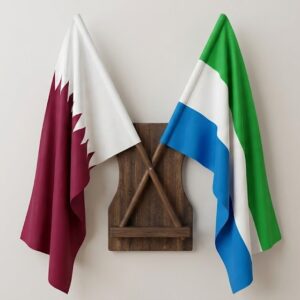
ABOUT QATAR
ECONOMIC PROFILE
- Main Economic Driver: Oil and gas (70% of government revenue)
- Economic Vision: Diversification through Qatar National Vision 2030
- Business Environment: Free-market policies, low taxes, 100% foreign ownership now allowed in most sectors
- Key Strength: Highest per capita income globally
MAJOR INDUSTRIES
- Energy: Oil and gas production, LNG exportsFinance: Growing financial services sector
- Tourism: Major investment area, especially post-2022 World Cup
- ICT: “Smart Nation” program with USD 1.5 billion investment
- Infrastructure: Continuous development in preparation for future growth
TRADE OPPORTUNITIES
- Energy Technology: Equipment and expertise for energy sector
- Information Technology: Growing digital economy with major investments
- Agriculture: Food security initiatives and imports
- Education & Research: Knowledge-based economy development
- Construction & Infrastructure: Ongoing development projects
SIERRA LEONE’S COMPETITIVE ADVANTAGES
STRATEGIC LOCATION
- Access to West African markets through ECOWAS (400+ million people)
- Member of Mano River Union (50+ million people market)
- Atlantic Ocean access for shipping
BUSINESS ENVIRONMENT
- Unrestricted conversion of foreign investment funds
- No legal restrictions on obtaining foreign exchange
- Ongoing reforms to improve business climate
NATURAL RESOURCES
- Abundant mineral resources for export
- Fertile agricultural land with high rainfall
- Extensive fisheries potential
CONTACT INFORMATION
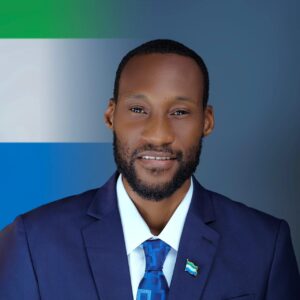
Mr. Jonathan Kamara Bio
– Villa 56, street 804, zone 66, West Bay P. O. Box 24346, Doha
– Cell: +974 5999 4917 | Tel: +974 4455 2795
– Email: j.kamara@slembassyqatar.com
“Building Stronger Economic Ties Between Sierra Leone and Qatar”
ABOUT SIERRA LEONE
ECONOMIC PROFILE
- Population: 8.2 million
- Land Area: 71,740 square kilometers
- GDP: USD 3.97 billion
- Key Natural Resources: Minerals (titanium, iron, aluminum), diamonds, agricultural land, fisheries
MAJOR INDUSTRIES
- Mining: Diamonds, iron ore, rutile, bauxite
- Agriculture: Cocoa, coffee, rice, palm oil
- Fisheries: Extensive continental shelf with rich marine resources
- Telecommunications: Rapidly expanding sector
- Tourism: Developing sector with growth potential
TRADE STATISTICS
- Main Export Products: Minerals, precious stones (diamonds), wood, cocoa
- Main Import Products: Rice, petroleum products, vaccines, medicaments, vehicles
- Major Export Partners: China (54.1%), Belgium (11.8%), UAE (5.6%), Germany (4.1%)
- Major Import Partners: China (33.3%), India (11.7%), Turkey (9.1%), USA (5.8%)
INVESTMENT OPPORTUNITIES IN QATAR FOR SIERRA LEONEAN BUSINESSES
AGRICULTURAL PRODUCTS
- Qatar imports most of its food supplies
- Opportunities for Sierra Leone’s agricultural exports: cocoa, coffee, fruits
- Food security partnerships and agricultural investment potential
MINERAL RESOURCES
- Sierra Leone’s expertise in mineral extraction
- Technology and knowledge transfer opportunities
- Value-added mineral processing ventures
TOURISM DEVELOPMENT
- Knowledge sharing for tourism infrastructure development
- Cultural exchange programs
- Joint hospitality training initiatives
LABOR MARKET
- Skilled and semi-skilled workforce opportunities
- Professional services in various sectors
- Training and capacity building collaborations
PROPOSED COLLABORATION FRAMEWORK
TRADE FACILITATION
- Direct trade routes between Sierra Leone and Qatar
- Customs facilitation and harmonization
- Regular trade missions and exhibitions
INVESTMENT PROMOTION
- Joint venture opportunities in priority sectors
- Information sharing on investment climate
- Business matchmaking services
CAPACITY BUILDING
- Technical assistance programs
- Knowledge transfer initiatives
- Educational and professional exchanges